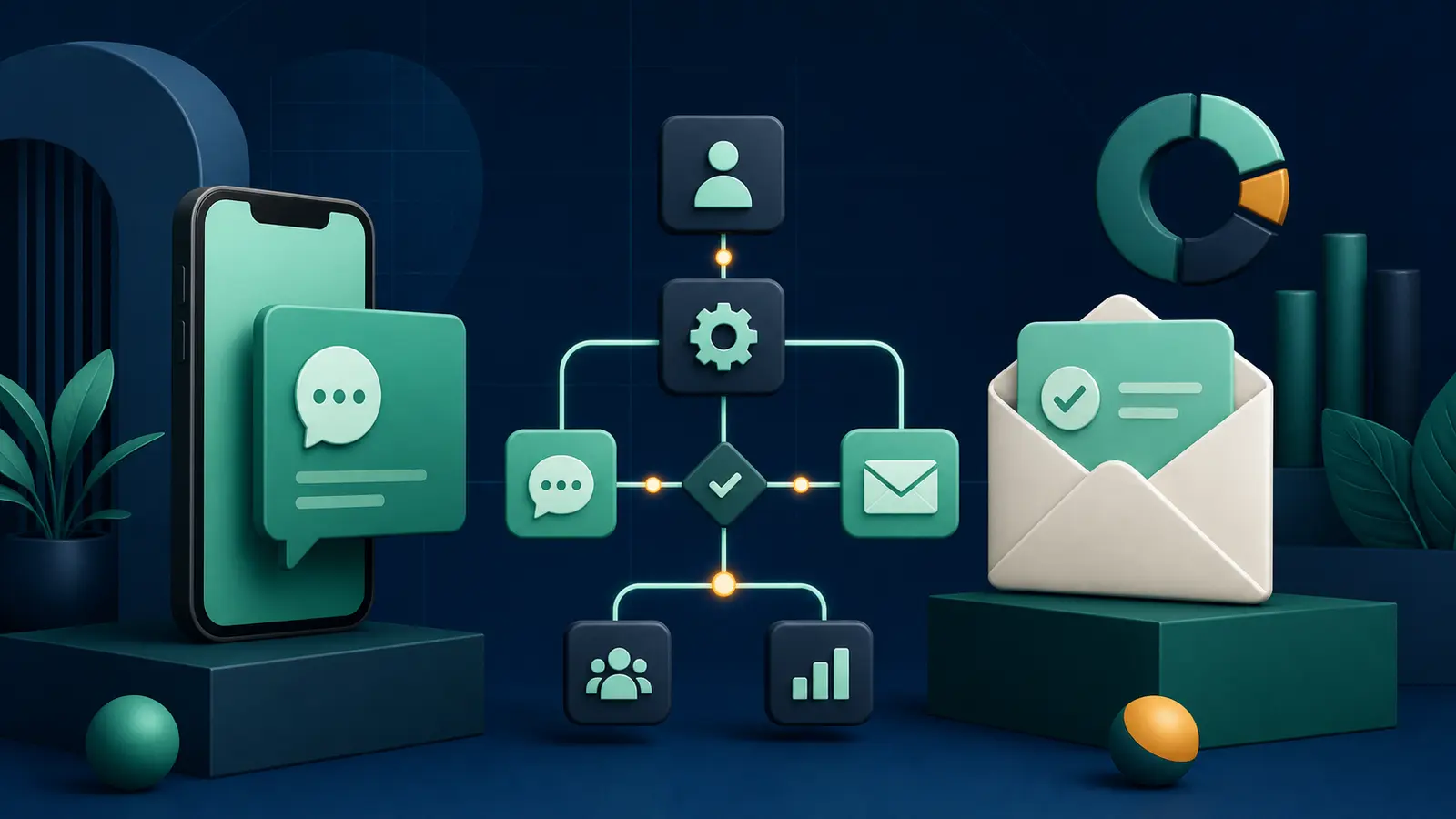
Omnichannel marketing does not mean promoting on every channel every day. It means deciding when SMS should carry an urgent, concise update, when email should explain the detail, and when the customer should receive nothing. Bartago brings contacts, tags, lead forms, Android SMS senders, email senders, tracked links, and automation into one workspace. That gives a small team the control to build a measurable system without stitching together a large stack. Start with one consented audience and one use case close to revenue or service quality.
Give each channel a clear job
SMS is immediate; email carries depth
Use SMS for short reminders, delivery changes, and time-sensitive actions. Use email for guides, product stories, and offers that need context or visual structure. Repeating the same copy across both channels rarely adds value and can increase fatigue.
- Urgent and concise: SMS
- Visual or detailed: email
- Preference and consent: contact profile
- No response: bounded follow-up
Start with one customer journey
From form submission to a measurable outcome
A useful first workflow creates a contact after a form submission, applies a source tag, sends a welcome SMS, waits one day, and sends a helpful email. Give every step a purpose and define the end event: a purchase, booking, or qualified reply.
Create a weekly operating rhythm
Optimize learning, not volume
Review audience health, failed sends, clicks, conversions, and opt-outs each week. Document workflows that create value and pause follow-ups that do not. Put quiet hours, frequency caps, and duplicate-journey guards into the operating plan.
Practical checklist
- One consented segment
- One journey goal
- Distinct roles for SMS and email
- A frequency cap
- Weekly analytics review
Key takeaway
The power of omnichannel marketing is not more messages; it is choosing the right channel with the same customer context.
Final thoughts
Make one form-to-follow-up journey production-ready in the first 30 days. Test it with 50–100 consented contacts, seed every message to your own inbox and phone, and improve timing and copy from observed results. Budget carrier charges separately from Bartago automation credits.
Verify consent, provider or carrier policy, and current applicable requirements before launching a campaign.
Start with 100 free automation credits →Common questions
Should SMS and email go out together?
Only when the customer needs both. Avoid duplicate copy at the same moment; choose the channel by urgency and journey stage.
What should the first metric be?
Choose one business outcome such as a booking, purchase, or qualified reply, then track opt-outs and failures as guardrails.
Sources and editorial note
Last editorial review: August 1, 2026. Legal and policy sections are general information, not legal advice. Verify current requirements with official sources and a qualified adviser.